Three Ways Builders Can Incorporate Geothermal Heating and Cooling
Key Highlights
- Early integration of geothermal ground loops during master planning can prevent costly delays;
- New leasing models and federal tax incentives eliminate upfront costs, making geothermal systems more financially accessible;
- Implementing geothermal solutions aligns with environmental goals, reduces energy demand during peak times, and accelerates project approvals.
By WYATT ROBERTS, Head of New Construction, Dandelion Energy
Builders are experiencing pressure points in every direction.
Construction costs are rising, state and local building codes are tightening, and homebuyers are more sophisticated than ever, demanding homes that are not just beautiful but also efficient, healthy, and resilient.
Geothermal heating and cooling provide a powerful answer to these demands.
These systems leverage the consistent temperature of the earth below ground to regulate indoor temperatures. They use an electric-powered heat pump to transfer heat; in winter, it brings warmth from the ground into the home, and in summer, it moves heat from your home back into the cooler earth.
It is the most efficient, cost-effective, and durable heating and cooling solution on the market.
However, this HVAC solution has historically been a niche upgrade, perceived as complex and carrying a prohibitive upfront cost. Not anymore.
Here’s how builders can make integrating geothermal heating and cooling easier than ever before.
#1 Prioritize Early Integration in Master Planning
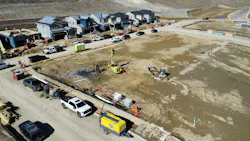
Friction disrupts the design process and construction timeline. To keep projects on schedule and on budget, geothermal design, specifically the ground-loop step, needs to be completed early, before foundation work begins.
Thoughtful planning early in the design process ensures the ground loop installation is seamlessly integrated with other site work, such as excavation and utility trenching, which prevents costly redesigns and project delays.
Additionally, as electrification mandates become more common, utilities are grappling with soaring peak demand. Geothermal offers a low-impact, grid-friendly solution, using about 60 percent less electricity during peak cold days in colder climates.
When paired with its lower emissions and reduced cost of ownership, geothermal heating and cooling can accelerate all approvals needed for a project, from utility boards to local zoning and planning boards. We have seen that geothermal can pave the way to approvals, helping projects move forward quickly in desirable, stringent locations where regulators are keen on environmentally friendly construction.
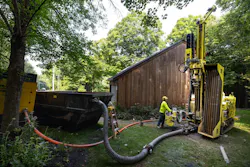
Practically, early integration can include engaging a geothermal partner during the master planning phase to seamlessly integrate the ground loop installation into the site work schedule.
#2 Leverage Rebates, New Leasing Models Eliminate Upfront Costs
For decades, the single most significant barrier to geothermal adoption was the upfront cost.
While these systems are highly efficient and more affordable to run than traditional HVAC systems, those cost savings are realized over time, providing little incentive for builders or buyers looking to control their immediate expenditures.
Even with clear long-term savings, the initial investment was a non-starter for most builders focused on construction budgets.
Now, the cost barrier to entry is gone. Many states and utilities offer builders significant incentives to offset the up-front cost.
Additionally, the passage of H.R.1 in 2025 fundamentally reset the financial framework for geothermal.
The bill did two critical things. First, it preserved the 30-50% federal Commercial Investment Tax Credit (ITC) for geothermal heat pumps through 2034. Additionally, it authorized third-party ownership models for residential geothermal systems for the first time.
This means that builders can now integrate a premium geothermal system into new homes for significantly less than the cost of traditional HVAC systems.
In regions where installation costs are prohibitive, this leasing model can off set these costs.
It’s a win-win for builders and buyers.
Builders eliminate the upfront investment, and buyers get a home with superior comfort and efficiency, and simply lease the system for a pr
edictable, low monthly payment.
#3 Sell the Experience, Not Just the Efficiency
Geothermal heating and cooling solve many problems. It helps builders meet energy code requirements, saves on construction costs, and unlocks a fundamentally better, more valuable product.
The systems also deliver an experience that conventional HVAC can’t match.
For instance, geothermal heating and cooling eliminates the need for noisy, ugly outdoor condenser units. Whether you’re developing a multi-family project or installing at a single-family home, the final product is cleaner, quieter, and offers more free space once occupied by condensers.
The environmental and cost improvements are built to last.
Geothermal heating and cooling systems have double the life expectancy of traditional HVAC units while also reducing maintenance requirements because equipment is inside the home and not exposed to the elements.
With 75 percent of homeowners already seeking ways to lower their energy bills and many concerned about future rising costs, geothermal heating and cooling offer the long-term cost stability and superior comfort they demand.
Building Better on Purpose
The barriers that once made geothermal intimidating for builders have largely disappeared.
With early planning integration, innovative leasing models that eliminate upfront costs, and a superior homeowner experience that goes far beyond efficiency metrics, geothermal is no longer a niche upgrade. It also doesn’t cost more than traditional HVAC systems.
There is a pathways to builders not having to spend more to deliver a better product. It’s a smarter standard for the next generation of US buildings and housing.
The result can mean better buildings, more satisfied buyers, and projects that meet today’s demands while remaining attuned to tomorrow’s challenges.
Geothermal is also a solution best implemented intentionally. Make it a deliberate plan now and ensure your final result meets these objectives.
About the Author
Wyatt Roberts is Head of New Construction for Dandelion Energy, a leading provider of residential geothermal heating and cooling solutions. He is a builder and a building scientist, and is passionate about reducing the impact of our built world on the global environment. Wyatt works with partners across a variety of sectors to better understand, design, and deploy geothermal in all of our buildings. For more information, visit www.dandelionenergy.com.