A Microbial Shift in Managing Indoor Environments
Key Highlights
- Microbial exposure is now understood as essential for immune development, challenging the traditional view of microbes as solely harmful;
- Indoor microbiomes are shaped by factors like outdoor air, ventilation, humidity, and building materials, influencing occupant health and structural resilience;
- Managing IAQ involves promoting microbial diversity while controlling pathogens, mold, and inflammatory agents through targeted environmental strategies;
- Advanced monitoring techniques, including continuous IAQ and microbiome sampling, are crucial for understanding and optimizing indoor microbial ecosystems.
by STEPHANIE TAYLOR, M.D., M. Architecture; ASHRAE Distinguished Lecturer; Medical Advisor, ThinkLite Air
For centuries, we have considered microbes our enemies. This view was historically understandable because bacteria, viruses, and fungi—invisible to the naked eye—were associated with contamination, decay, and infectious disease.
We now know that the human-centered assumption that microbes are inherently dangerous is incomplete and inaccurate. New tools have revealed that each of us is a living microbial ecosystem, with our bodies in constant exchange with microbes from soil, water, animals, plants, air, buildings, and other people.
This profound shift in understanding has direct implications for managing indoor air quality (IAQ) and defining a healthy building. Our goal should no longer be simply to eliminate all microbes. Instead, we should aim to reduce exposure to pathogens, mold growth, and inflammatory contaminants while preserving microbial diversity through proper environmental conditions.
This requires a new model of indoor environmental management: one that shifts from treating buildings as sterile containers to creating indoor environments that allow occupants to interface with a healthy microbial world, thereby supporting immune resilience and healthy human physiology.
From Germ Theory to the Microbiome
For most of human history, people lived in close contact with microbes. Everyday life involved exposure to soil, animals, plants, outdoor air, fermented foods, and diverse microbial communities. Long before microorganisms were understood, these exposures helped shape human immune development.
The first major awareness of microorganisms emerged in the 1670s, when Antonie van Leeuwenhoek used handcrafted microscopes to observe tiny “animalcules” in dental plaque and water. At the time, these organisms were viewed as scientific curiosities, and their roles in disease, immunity, digestion, and human development were still unknown.
The second major turning point came in the nineteenth century with the work of Louis Pasteur, Robert Koch, and others. Germ theory established that specific microorganisms were associated with specific diseases. This discovery was a major advance in public health, leading to sanitation, sterilization, vaccines, antisepsis, antibiotics, and safer food and water systems—interventions that saved millions of lives.
But germ theory also had an unintended consequence: it encouraged the belief that microbes are “germs,” and that germs are bad. This message became embedded in medicine, public health, cleaning practices, building operations, and consumer culture, so that the objective often became microbial eradication rather than microbial balance.
The third turning point came with molecular biology and DNA sequencing. Traditional culture methods could grow only a fraction of microbes, missing the multitude of organisms that cannot easily be cultured in the laboratory but still live on and within the human body. DNA sequencing allowed scientists to identify entire microbial communities from their genetic material, bypassing the limitations of culture methods.
The NIH Human Microbiome Project, launched in 2007, provided tools that revealed the enormous microbial diversity associated with healthy humans and helped clarify relationships between microbial communities and health outcomes.
This was not merely a technical advance. It revolutionized the biological meaning of being human. The human body is not a single organism functioning alone; it is a host–microbial ecosystem shaped by interactions among human cells, microbial cells, microbial metabolites, immune signaling, and environmental exposures. This recognition represents a major paradigm shift.
The Human Microbiome and Health
The human microbiome refers to the communities of bacteria, fungi, viruses, microbial genes, and microbial products that live on and within the body. These communities occupy the gut, skin, mouth, upper airway, lungs, vagina, and other body sites. They vary according to anatomy, age, diet, birth history, medications, infections, geography, environment, and lifestyle.
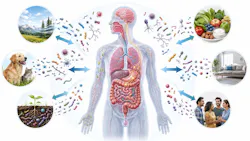
The microbiome is far from passive. It helps regulate nutrient metabolism, immune education, inflammation, pathogen resistance, and neuroendocrine communication among the gut, immune system, and brain. The Human Microbiome Project revealed how microbial components contribute to healthy physiology and disease, and later research linked microbiome dynamics to pregnancy, pre-term birth, inflammatory bowel disease, and metabolic stressors such as prediabetes.
One of the microbiome’s key roles is immune system training. A well-regulated immune system must be able to defend against harmful exposures while tolerating microbial and environmental signals that are not threats. Failure to make this distinction is associated with allergic diseases such as asthma, inflammatory disorders, and autoimmune conditions. Early microbial exposures help the immune system learn the difference between harmless or beneficial microbes and dangerous pathogens.
This concept is often described as the “old friends” hypothesis. Humans co-evolved with environmental and commensal microorganisms that helped shape immune regulation. Modern lifestyles—including urbanization, reduced contact with nature, antibiotic use, intensive cleaning, and time spent in sealed buildings—have reduced exposure to these “old friends,” potentially disrupting normal immune development and regulation.
The respiratory microbiome contains microbes that interact with upper airway mucous membranes, local immune cells, and lower airway tissues to influence inflammation and pathogen control. Loss of microbial diversity, or dominance by potentially pathogenic organisms, can contribute to inflammation and disease progression.
The gut–immune–brain axis is another rapidly growing area of research. Gut microbial ecosystems influence the nervous system indirectly through immune, endocrine, metabolic, and neural signaling pathways, with implications for neuroinflammation and brain function.
The Indoor Microbiome, IAQ, and Occupant Health
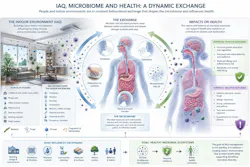
Just as the human body has a microbiome, buildings have indoor microbiomes. These are populated by microbes from human occupants, pets, outdoor air, soil, water systems, indoor plants, dust, materials, and mechanical systems. Indoor conditions determine which organisms survive, grow, fragment, aerosolize, or disappear through a form of “survival of the fittest.”
Indoor microbiomes may support immune tolerance and resilience when they are diverse and balanced. Conversely, when conditions favor water damage, high particle loads, or harsh chemical off-gassing, associated microbes and microbial fragments can contribute to allergies, inflammation, or toxin exposure.
Clearly, not all microbial exposures are beneficial. Pathogens remain dangerous. Mold growth in damp buildings and microbial fragments such as endotoxins, fungal particles, and allergens can be biologically active and may contribute to inflammation and respiratory symptoms. The goal is not “more microbes,” but a diverse, resilient indoor microbiome that supports normal physiology while minimizing pathogenic, inflammatory, and toxic exposures.
The IAQ factors known to shape the indoor microbiome include the following:
Ventilation introduces diverse outdoor microbes and dilutes human-associated respiratory pathogens. Poor ventilation can allow particles, carbon dioxide, odors, and human-associated microbes to accumulate.
Filtration is especially important when outdoor air contains wildfire smoke, pollution, pollen, or fungal spores. Filtration removes particles that can carry microbes, allergens, fungal fragments, endotoxins, pollen, and other inflammatory materials.
Relative humidity affects bioaerosol transmission and human mucosal defenses. Low relative humidity can enhance the suspension and airborne transmission of particles while impairing natural respiratory defenses. Conversely, very high humidity, particularly when it leads to condensation or water damage, can promote mold growth and building material degradation.
Temperature can influence occupant physiology. Thermal stress may reduce immune, respiratory, and cardiovascular reserve, particularly in vulnerable populations.
Harsh chemical surface cleaners can reduce pathogens on surfaces; however, they can also irritate airways, increase VOC exposure, and alter microbial communities by selecting for resistant organisms.
Pets, plants, soil, and outdoor air may expose occupants to greater and potentially beneficial microbial diversity, but these exposures must be balanced against allergies, asthma triggers, and hygiene needs.
Materials and substrates also matter. Damp or dirty materials can support harmful microbial reservoirs, while synthetic and cleanable surfaces may reduce pathogen persistence in high-risk settings. On the other hand, excessive disinfection in low-risk settings may diminish beneficial microbial diversity.
Advancing Microbiome Research from Correlation to Causation
The science connecting indoor microbiomes, human microbiomes, IAQ, and health is promising but still developing. Research has linked microbial patterns and building characteristics with health outcomes, but correlation does not prove causation. In addition, microbial management protocols must accommodate different risk profiles.
For example, pathogen control and infection prevention may appropriately dominate in high-risk settings such as hospitals, senior living facilities, and housing for immunocompromised individuals. In homes and schools, however, microbial diversity, moisture prevention, ventilation, low-toxicity cleaning, and nature contact deserve greater emphasis.
Buildings can serve as real-world laboratories to test mechanisms and intervention effects through the following steps:
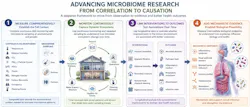
- Combine continuous IAQ monitoring with microbiome sampling. Monitor temperature, relative humidity, CO₂, PM₂.₅, particle counts, VOCs, ozone, nitrogen dioxide, carbon monoxide, occupancy, and cleaning events alongside microbiome sampling of air, dust, surfaces, and humans. Without environmental context, microbiome data are difficult to interpret;
- Use continuous monitoring rather than one-time sampling. Microbial ecosystems are dynamic. They change with seasons, occupancy, HVAC operations, water events, cleaning practices, and outdoor air events;
- Correlate environmental improvements with biological and health outcomes. Longitudinal monitoring can help evaluate whether improved ventilation, upgraded filtration, humidity optimization, moisture remediation, reduced harsh chemical cleaning, and better source control are associated with changes in microbial diversity, pathogen load, occupant inflammatory markers, respiratory symptoms, absenteeism, and infection rates;
- Add mechanistic endpoints. Human health outcomes are multifactorial. Intermediate biomarkers such as inflammatory cytokines, nasal epithelial markers, mucosal barrier indicators, immune profiles, metabolomics, and respiratory microbiome shifts can help demonstrate biological plausibility.
Summary
Human and building microbiomes are connected.
Buildings receive microbes from people, animals, water, soil, dust, and outdoor air. Building conditions then select which organisms persist, grow, fragment, or aerosolize. Occupants are re-exposed through breathing and touching surfaces. This exchange can support resilience when microbial communities are diverse and balanced, or it can contribute to disease vulnerability when indoor environments are dominated by pathogens, excess particles, irritating chemicals, or toxic contaminants.
The goal of IAQ management is not sterility. Rather, it is microbial management that protects occupants from pathogens and harmful exposures while supporting conditions that allow human microbial ecosystems to remain diverse, stable, and resilient. This represents a fundamental shift: from killing microbes indiscriminately to managing indoor environments as biologically active systems that shape human health.
Based in Stowe, VT, Stephanie Taylor, M.D., M. Architecture, is a medical advisor to ThinkLite Air; an InciteHealth Fellow at Harvard Medical School; an ASHRAE Distinguished Lecturer; and a member of the USGBC LEED Technical Advisory Indoor Environmental Quality Group. She is also a member of the HPAC Engineering Editorial Advisory Board.
References
1. Human Microbiome Project Consortium. Structure, function and diversity of the healthy human microbiome. Nature. 2012; 486: 207–214;
2. Peterson J, Garges S, Giovanni M, et al. The NIH Human Microbiome Project. Genome Research. 2009; 19(12): 2317–2323;
3. Rook GAW. The old friends hypothesis: evolution, immunoregulation and modern microbial exposures. Clinical & Experimental Immunology. 2023;
4. Stephens B. What have we learned about the microbiomes of indoor environments? mSystems. 2016; 1(4): e00083-16;
5. National Academies of Sciences, Engineering, and Medicine. Microbiomes of the Built Environment: A Research Agenda for Indoor Microbiology, Human Health, and Buildings. Washington, DC: National Academies Press; 2017.