Industry Reacts to EPA Reversal on GHG Emissions
Key Highlights
- Sustainable design and health organizations warn that this EPA rollback of GHG standards will lead to increased pollution, health risks, and higher costs for consumers and businesses;
- Industry groups express concern over potential job losses and economic setbacks resulting from the GHG reversal;
- Advocates for climate action vow to continue efforts at the state and local levels to mitigate environmental and health impacts despite federal rollbacks.
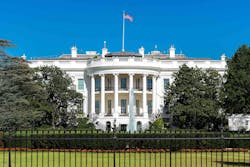
On Thursday, February 12, the White House and the U.S. Environmental Protection Agency made the stunning announcement that it would eliminate "both the Obama-era 2009 Greenhouse Gas (GHG) Endangerment Finding and all subsequent federal GHG emission standards for all vehicles."
Calling it "the single largest deregulatory action in U.S. history," EPA Administrator Lee Zeldin claimed the new "final rule" would save "American taxpayers over $1.3 trillion."
Here are some of the industry reactions to this ground-shaking announcement:
U.S. Green Building Council (USGBC)
"The administration's announced elimination of the longstanding Endangerment Finding is contrary to science and undermines the country's security and future," said Ben Evans, USGBC's federal legislative director. "Climate change is an established threat to human health and the environment, a threat that we can overcome by taking action today to reduce greenhouse gas emissions. The Environmental Protection Agency has the statutory responsibility to protect current and future generations of Americans, a responsibility it is abdicanting with this decision."
Added USGBC senior policy counsel Liz Beardsley, "USGBC will persist in our work to enable a built environment that reduces harmful pollution and improves quality of life. In the absenc of federal policy, we will continue to be a resource for American states, cities and businesses as they confront economic, physical and health risks from climate change."
American Institute of Architects (AIA)
A statement from Illya Azaroff, FAIA, 2026 AIA President:
"The American Institute of Architects (AIA) strongly opposes the Environmental Protection Agency’s decision to rescind the 2009 Endangerment Finding and repeal associated greenhouse gas vehicle standards, a move that disregards science and undermines public safety. While the administration frames this as a 'deregulatory victory', it in fact threatens the economic stability and safety of the built environment.
For 15 years, the architecture, engineering, and construction (AEC) sector has operated with a clear, science-based mandate to protect public health, safety, and welfare by investing in high-performance buildings, advanced materials innovation, and emissions-reducing technologies. This is because architects understand the role the built environment plays in air quality, carbon emissions, and ecological health.
Buildings alone are responsible for nearly 42% of annual global carbon dioxide emissions, but architects cannot tackle this challenge alone. The performance of a building is inextricably linked to the transportation systems and energy grids that serve it. By dismantling these standards, the EPA is injecting volatility into the $1.6 trillion construction industry and opening the door to further deregulation impacting the built environment. This policy reversal will continue to weaken the United States’ position as a global climate leader, undermine trust in the federal government as a reliable partner , and jeopardize decades of progress in reducing carbon emissions.
Architects are committed to practical, science-driven solutions that strengthen public safety, economic resilience, and environmental performance. AIA calls on federal leaders to uphold policies grounded in credible science and long-term risk management.
Architects will continue to lead through design, but we urge federal partners to join us in recognizing the critical interdependence of transportation, energy, and the places Americans live and work."
American Council for an Energy-Efficient Economy (ACEEE)
The Trump administration’s decision to repeal greenhouse gas emissions standards for cars and trucks will raise costs for American families and businesses by billions of dollars in the coming years.
“Strong vehicle standards save drivers money every time they fill up. Canceling the standards means higher costs at the pump, increased costs to own a car, and more pollution,” said Peter Huether, ACEEE senior senior transportation research associate. “In addition, today’s decision undermines a key U.S. industry that supports hundreds of thousands of American jobs.”
Under the Environmental Protection Agency (EPA) standards eliminated today, the average new vehicle in 2032 was projected to save drivers more than $10,000 over the car’s lifetime compared to a 2022 vehicle due to savings on fuel and maintenance. Today’s rule wipes out $61 billion a year in total consumer savings for passenger vehicles.
ACEEE filed comments with the EPA in September outlining the significant consumer savings, public health benefits, and economic gains resulting from existing EPA standards.
The EPA’s rollback of auto standards is part of a larger rule today rescinding the agency’s 2009 endangerment finding—a determination the Supreme Court required the EPA to make—that greenhouse gas emissions endanger public health and welfare and thus must by law be regulated.
Medical Society Consortium on Climate and Health (MSCCH)
"The Trump administration's repeal of the EPA Endangerment Finding -- the determination that greenhouse gas emissions endanger public health -- should concern every clinician," said Lisa Patel, MD, MESc., executive director of the Medical Society Consortium on Climate and Health.
Writing in an op-ed for MedPageToday.com, Dr. Patel added, "The Endangerment Finding is not a political statement. It is a scientific conclusion, grounded in decades of evidence, that greenhouse gas pollution drives health harms through heat exposure, air pollution, extreme weather, and the spread of infectious disease. It required the federal government to regulate and place limits on greenhouse gas emissions from cars, power plants, and industry. Rescinding the determination undermines one of the federal government's most important tools for reducing preventable illness...
"Many of us entered medicine to protect health before disease takes hold. The question now is whether our regulatory systems will continue to do the same. The air our patients breathe should not make them sick and policy choices should not make our jobs harder by increasing preventable disease."
#####
.