ABI: Design Billings Soft Again in July
Key Highlights
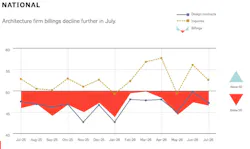
- The American Institute of Architects' latest Architecture Billings Index for July was 46.6, down significantly from June;
- Client inquiries into new projects increased, but the value of signed design contracts fell, reflecting greater caution;
- Construction employment added 33,000 jobs in July, but broader economic conditions remain mixed, with persistent inflation pressures curbing industry growth.

Washington DC, August 19, 2026 || The AIA/Deltek Architecture Billings Index® (ABI) score for July was 46.6, indicating somewhat further softening from June. The persistent downturn in business conditions now extends to nearly three and a half years, as many design firms continue to struggle to grow their billings.
Clients are still bringing business to firms, as inquiries into new projects rose again in July, although at a slower pace than in June. However, the value of newly signed design contracts declined further after nearly approaching growth last month.
"Overall economic conditions remain subdued, with revised 2025 employment data revealing smaller gains than anticipated and nonfarm payrolls increasing by just 130,000 in January 2026," said AIA Chief Economist Richard Branch.
“That said, construction employment was a bright spot, adding 33,000 jobs, including 25,000 in nonresidential specialty trades, signaling a positive shift after stagnant growth last year. Architectural services also showed resilience, with a net gain of 1,300 positions in 2025 despite early declines and a slight dip in December."
Broader economy remains uneven as inflation pressures persist
Conditions remained relatively mixed in the broader economy in July. Nonfarm payroll employment decreased for the second time this year, shedding 23,000 jobs in July. Construction employment remained generally flat, while architecture services employment declined by 100 positions in June (the most current data available). June marked the fourth consecutive month of declines in employment in the industry, which has lost a total of 900 jobs so far since January.
Inflation remains high, as the Consumer Price Index (CPI) increased by 0.1% from June to July, after declining by 0.4% from May to June. Shelter and food (particularly away from home) were the primary contributors to the increase this month, although energy prices declined by 1.5%.
In better news, consumers were somewhat more optimistic, with the University of Michigan’s Index of Consumer Sentiment rising by 11.5% in July. However, the overall index remains down by 10.5% from one year ago, as purchasing power/inflation remains a key issue for consumers.
For the full monthly report, including methodology, click here.